The Quiet Herb
In the old pharmacopoeias, Ganoderma is not listed among the dramatic remedies. It sits in the first rank — the Superior class — where the herbs that build rather than fix are kept.
What Does Traditional Chinese Medicine Actually Say About Ganoderma?
If you look at a modern supplement label, you will see numbers: milligrams of polysaccharides, percentages of triterpenoids. But before chromatography and mass spectrometry, there were other tools — tasting, observing, tracking effects across seasons and years, writing down what worked and what did not.
Traditional Chinese Medicine organizes its understanding of Ganoderma around four pillars: nature, flavor, channel affinity, and action. Each of these tells a story.
| Property | TCM Classification | What It Means |
|---|---|---|
| Nature (性) | Neutral (平) | Neither warming nor cooling. Suitable for long-term daily use without disturbing internal balance. |
| Flavor (味) | Sweet (甘) | A nourishing, building quality. Sweet herbs in TCM generally tonify and harmonize rather than purge or disperse. |
| Channel Entry (归经) | Heart, Lung, Liver, Kidney | These four organ systems govern blood circulation, respiration, detoxification, and foundational energy — together covering the body's most fundamental processes. |
| Herb Class (上中下品) | Superior (上品) | The highest class. Superior herbs are taken for wellness maintenance over long periods, not for acute conditions. They are considered safe and gentle. |

Three Core Actions — In Language That Still Matters
1. Tonifying Qi and Nourishing Blood (补气养血)
In TCM, Qi is not a mystical force — it is a functional concept. Think of it as the sum of your metabolic capacity: digestion, circulation, cellular repair, immune surveillance. When Qi is insufficient, everything slows down. The old term for this state was xu lao — deficiency fatigue.
The sweet flavor and neutral nature of Ganoderma make it a gentle Qi tonic. Unlike stronger Qi herbs that can overstimulate or create heat, Ganoderma supports without pushing — which is why it appears in formulations designed for long-term daily support rather than short-term rescue.
2. Calming the Spirit and Anchoring the Mind (安神定志)
The Heart channel entry is significant here. In TCM, the Heart houses the Shen — the spirit, the consciousness, the quality of presence. When Shen is unsettled, sleep becomes shallow, the mind races, and concentration dissolves.
Ganoderma's Heart affinity has been noted for centuries as a Shen-calming influence — not sedating, but gently anchoring. The modern resonance is obvious: in a world of constant stimulation, anything that helps the mind settle without damping it deserves attention.
3. Supporting the Liver and Kidney (补肝益肾)
In the TCM framework, the Liver stores Blood and governs the smooth flow of Qi. The Kidney stores Essence (Jing) — the deepest layer of constitutional energy. Together, they form the axis of aging and vitality.
When the old texts say Ganoderma "benefits the Liver and Kidney," they are describing a herb that supports the two organ systems most closely associated with long-term energy, resilience, and graceful aging. This is why Ganoderma has historically been classified as a longevity herb — not because it extends lifespan magically, but because it supports the systems whose decline defines the aging process.
The Modern Lens: What TCM Described, Science Later Measured
Here is the satisfying part: many of the actions that TCM described qualitatively are now supported by quantitative research, just in different vocabulary.
| TCM Concept | TCM Description | Modern Research Direction |
|---|---|---|
| 补气 / Tonify Qi | Restore metabolic vitality, reduce fatigue | Polysaccharide-mediated immune modulation; improved cellular energy metabolism in animal models |
| 安神 / Calm Shen | Quiet the mind, deepen sleep | GABAergic and serotonergic pathway modulation observed in Ganoderma extracts |
| 养肝 / Nourish Liver | Support detoxification, protect liver function | Hepatoprotective triterpenoids demonstrated in multiple in vitro and animal studies |
| 益肾 / Benefit Kidney | Support foundational energy reserves | Antioxidant activity; cellular aging markers; adrenal support research |
Why the Herb Class Matters
The three-tier classification system — Superior (上品), Middle (中品), and Lower (下品) — comes from the Shen Nong Ben Cao Jing, the oldest surviving Chinese herbal text, compiled around 200 CE. The categories are worth understanding:
- Superior (上品) — gentle herbs for long-term wellness support. Non-toxic. Intended for daily or regular use. Ganoderma sits here, alongside herbs like Goji berry and Chinese yam.
- Middle (中品) — herbs with stronger effects, used for specific imbalances. Require more careful dosing and timing.
- Lower (下品) — potent herbs with significant effects. Generally used in short courses under guidance. Some have toxicity at high doses or prolonged use.
That Ganoderma was classified as Superior — and has remained so across two millennia of clinical observation — tells you something about its safety profile and its intended role in the herbal tradition.
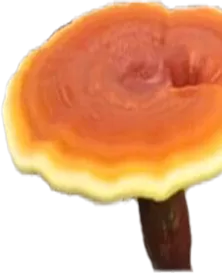
A superior herb, grown the superior way — log-cultivated on a mountain, not rushed in a bag.
Shop Ganoderma Read: Five Elements & Ganoderma