Disclaimer: This article is for informational and educational purposes only. Statements have not been evaluated by the FDA. Ganoderma supplements are not intended to diagnose, treat, cure, or prevent any disease.
An Ancient Beginning
Ganoderma lucidum is among the oldest medicinal herbs in recorded history. When we survey the annals of Chinese civilization, references to this extraordinary mushroom reach back to the centuries before the birth of Christ. Its origins are intertwined with the ambitions of ancient emperors who sought to extend their vitality and preserve youthful vigor through the finest herbs the land could offer.
Peng Zu: The Legend of 900 Years
One of the most enduring legends surrounding Ganoderma involves Peng Zu, a mythical figure said to have lived nearly 900 years during the Shang Dynasty (16th–11th century B.C.). Ancient texts credit his extraordinary longevity — and his reputed 100 marriages — in part to his use of Ganoderma lucidum.
While the legend is undoubtedly embellished, it reveals how early Chinese culture came to associate this mushroom with vitality, long life, and enduring well-being.
The Imperial Palace Discovery
During the reign of Emperor Han Wu Di (156–87 BC), one of the most significant rulers in Chinese history, Ganoderma lucidum was discovered growing within the grounds of the imperial palace itself. This was interpreted as an omen of prosperity and divine favor — a sign that the empire flourished under heaven's blessing.
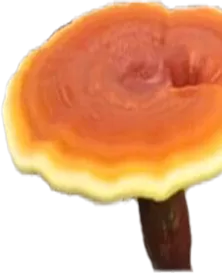
From that point onward, the mushroom was not merely medicine — it became a symbol of good fortune, vitality, and imperial power. Its distinctive kidney-shaped cap was carved into palace beams, painted on screens, and woven into the artistry of the royal court.
The Qin Emperor's Quest
The Qin Dynasty (221–206 BC) — from which the very name "China" derives — elevated the status of Ganoderma to extraordinary heights. Emperor Qin Shi Huang, the first ruler to unify China, is said to have dispatched hundreds of men and women on an imperial expedition to search for this prized mushroom. His goal was nothing less than the ancient dream of eternal vitality.
Across the centuries, Taoist priests of the first century also held Ganoderma in sacred regard. They incorporated it into their spiritual practices, believing it bridged the earthly and the divine.
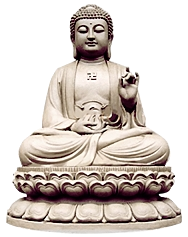
Classical statue representing the revered status of Ganoderma lucidum in traditional Chinese culture
Enter the Medical Canon
Beyond the legends of emperors, Ganoderma lucidum secured a place in China's most authoritative medical texts. In the Shen Nong Ben Cao Jing, the oldest surviving book on herbs compiled around 200 A.D., Ganoderma was classified as a Superior Herb — a rank placing it above even ginseng.
Centuries later, during the Ming Dynasty (1368–1644), Li Shizhen, one of the greatest physicians in Chinese history, devoted extensive study to Ganoderma lucidum in his monumental work Bencao Gangmu (Compendium of Materia Medica, 1578). Regarded as the most comprehensive medical encyclopedia of traditional Chinese medicine, this text cemented Ganoderma's reputation for generations to come.
The Modern Era
Ganoderma remained largely unknown in the West until the 1970s, when it was introduced to Europe as a remarkable herb worthy of scientific investigation. Clinical studies began, and researchers started the long process of examining the compounds behind its ancient reputation.
In 1972, Japan achieved a milestone: the first successful indoor cultivation of Ganoderma lucidum. This breakthrough meant the mushroom was no longer limited to what could be foraged from the wild — it could now be grown consistently, cleanly, and at scale. From that moment, research accelerated across both the East and the West.
From Imperial Treasure to Your Daily Ritual
The story of Ganoderma lucidum spans emperors and dynasties, legends and laboratories, sacred temples and modern cultivation facilities. What was once a secret guarded by royalty is now available to anyone who wishes to make this extraordinary mushroom part of their daily wellness practice.
Write Your Own Chapter
Explore our premium Ganoderma lucidum products — cultivated with the care that two thousand years of tradition deserve.
Browse Ganoderma Products