Know What You Are Taking
Spore powder. Spore oil. Fruiting body. Extract. If the labels blur together, you are not alone. Here is how to tell them apart — and why the difference matters for what you actually get.
What Is Ganoderma, Really?
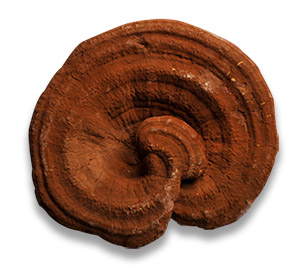
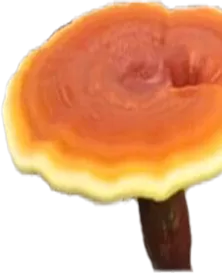
Ganoderma lucidum is a polypore fungus — a shelf mushroom that grows on decaying hardwood, primarily in the temperate forests of China, Japan, and Korea. Its Chinese name, Lingzhi (灵芝), translates roughly to "herb of spiritual potency." Its Japanese name, Reishi, carries similar weight. Three names, one mushroom — and 5,000 years of documented use behind it.
The Shen Nong Ben Cao Jing, compiled around 200 CE, placed Ganoderma in its highest class: Superior herbs. These were not prescribed for acute illness. They were recommended for long-term daily consumption — substances that maintained wellness rather than intervened in crisis. That classification tells you something important about how this mushroom was understood: gentle, cumulative, foundational.
Modern chemistry has identified over 400 bioactive compounds in Ganoderma. The ones you will see on product labels — polysaccharides, triterpenoids, organic germanium — are the headliners, but they work in concert with dozens of others that research is still mapping.
The Four Forms of Ganoderma — and How to Choose
Walk into any health store or browse online, and you will see Ganoderma in several forms. They are not interchangeable. Each concentrates different compounds, suits different needs, and comes at a different price point.
Ganoderma Spore Powder
The spores are Ganoderma's reproductive cells — microscopic particles ejected from the underside of the mature fruiting body. Each spore measures just 5 to 8 microns across, about one-tenth the width of a human hair. Rich in polysaccharides, triterpenoids, organic germanium, and selenium, the spores represent the mushroom's most concentrated genetic material.
There is a catch: each spore is encased in a double-layer hard shell made of chitin — the same material as crab shells. If you swallow whole spores, your digestive system cannot break through this wall, and most of the active compounds pass through unabsorbed. This is why quality Ganoderma spore powder must be cell-wall broken before it is effective.
Look for products that specify both the breaking method and the breaking rate. Low-temperature physical breaking (typically above 99% rate) preserves more active compounds than chemical or enzymatic methods, which can degrade heat-sensitive triterpenoids.
Ganoderma Spore Oil
If spore powder is the whole seed, spore oil is the essence extracted from within. Produced using supercritical CO₂ extraction from high-quality broken spore powder, Ganoderma spore oil is the most concentrated form available. It is particularly rich in triterpenoids and unsaturated fatty acids — the compounds most linked to Ganoderma's studied benefits.
Spore oil is typically the premium option: higher potency per dose, higher price per bottle. It is the choice when you want the maximum concentration in the smallest volume.
Ganoderma Fruiting Body
The fruiting body is what most people picture when they think of a mushroom: the visible cap and stalk. You can buy it sliced, ground, or whole. Traditionally, it is simmered for hours to make tea, added to soups, or soaked in alcohol for tinctures.
One thing worth knowing: the cap and the stalk are not equal. The cap contains the majority of polysaccharides and triterpenoids. The stalk is fibrous, relatively low in active compounds, and is often discarded during production of quality Ganoderma supplements. If you are buying whole fruiting bodies, look for products that are predominantly cap — or at minimum, ones that are transparent about the ratio.
Ganoderma Extract
Extract is Ganoderma that has been processed to concentrate specific compounds. There are two main types:
- Water extract — primarily concentrates polysaccharides (including beta-glucans), the compounds most studied for immune modulation
- Alcohol extract — primarily concentrates triterpenoids, the bitter compounds studied for liver support and cellular health
Water extract and alcohol extract yield different compound profiles, which is why many high-quality Ganoderma products use a dual-extraction process to capture both. Extract is also the form most commonly used in capsules and tablets — convenient, pre-measured, and standardized to a specific percentage of active compounds.
Storage note: Ganoderma extract is sensitive to oxidation. It degrades when exposed to air, heat, or moisture. Quality products come in sealed, opaque packaging and should be stored in a cool, dry place — not on a bathroom shelf or kitchen counter.
Spore Powder vs. Fruiting Body: Which Has More of What?
| Compound | Cell-Wall Broken Spore Powder | Fruiting Body (Water Extract) | Best Approach |
|---|---|---|---|
| Triterpenoids | Higher concentration | Lower concentration | Spore powder or spore oil for triterpenoids |
| Polysaccharides | Present | Higher concentration (water extraction concentrates them) | Extract or fruiting body for polysaccharides |
| Full spectrum | Broader compound range | Narrower, depending on extraction | Combining both forms may offer the widest coverage |
Does Spore Powder Taste Bitter?
Pure, unadulterated Ganoderma spore powder is not bitter. When freshly opened, it has a mild, earthy, slightly woody scent — nothing harsh. If your spore powder tastes distinctly bitter, it may contain added Ganoderma extract powder (which is naturally bitter due to triterpenoid content), or the spores may have been poorly processed.
Ganoderma fruiting body and extract, on the other hand, are genuinely bitter — and that bitterness is actually a quality indicator, as it comes from the triterpenoid content that researchers find most interesting.
Not Sure Which Form Is Right for You?
Browse our full range — from daily capsules to concentrated spore oil — and find the Ganoderma product that fits your routine.
Shop Ganoderma ProductsThese statements have not been evaluated by the Food and Drug Administration. This product is not intended to diagnose, treat, cure, or prevent any disease. The information on this page is for educational purposes and reflects traditional use history and published research. It does not constitute medical advice. Always consult a qualified healthcare professional before starting any supplement regimen.